Infrastructure delivery in Australia is changing shape. Projects are larger, urban footprints are tighter, and underground environments are increasingly congested with live services. Electrical, telecommunications, water and data assets now compete for space beneath roads, rail corridors and commercial precincts. For contractors operating in these conditions, excavation is no longer a blunt instrument. It is a precision task, which explains why vacuum excavation is accelerating ahead of 2026.
This shift is particularly evident across multidisciplinary construction projects delivered by contractors such as BRP Industries, where early-stage service identification plays a critical role in programme certainty and risk management.
What Vacuum Excavation Actually Solves
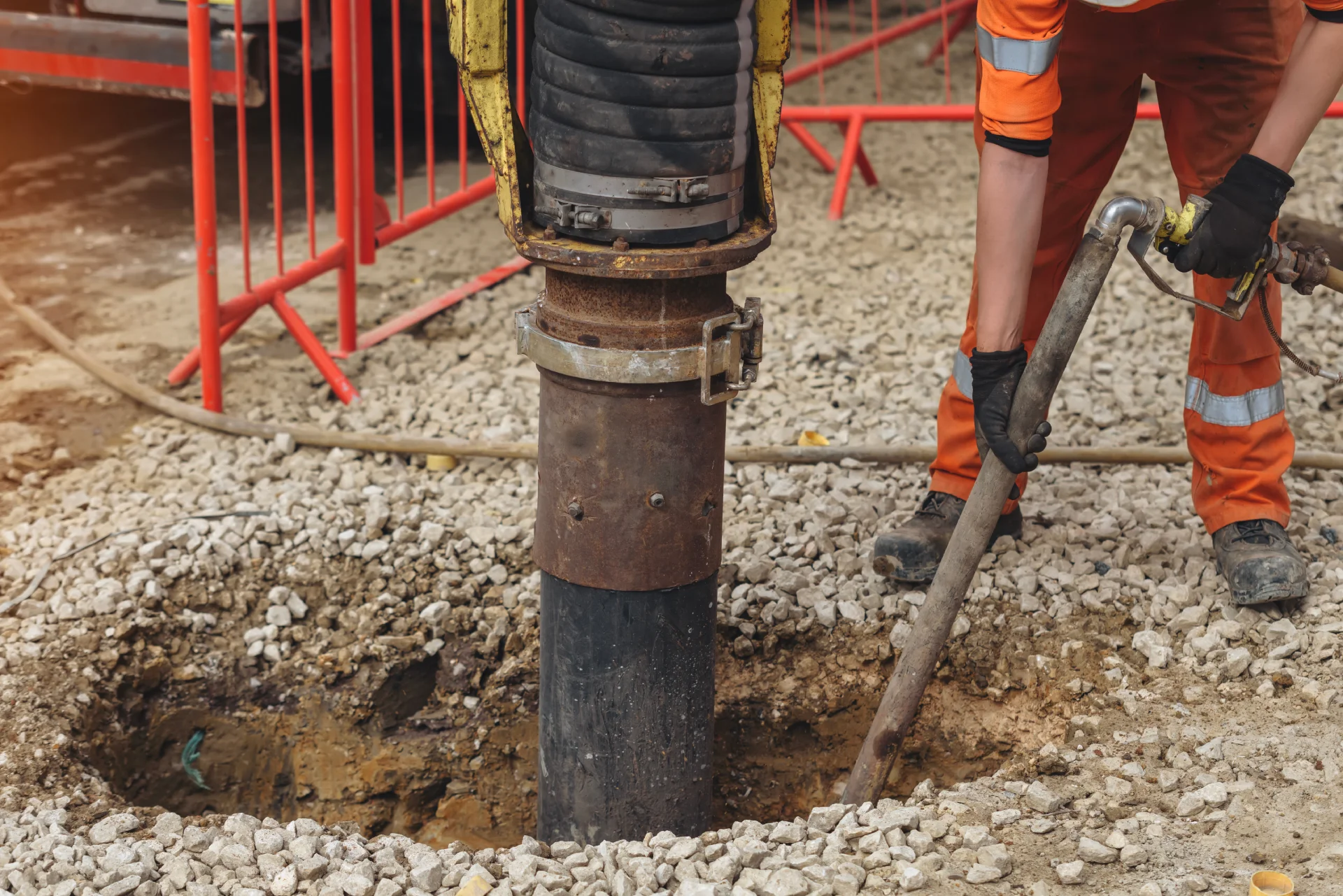
Vacuum excavation is often described as non-destructive digging, but that undersells its value. In practical terms, it allows contractors to expose underground assets without relying on guesswork.
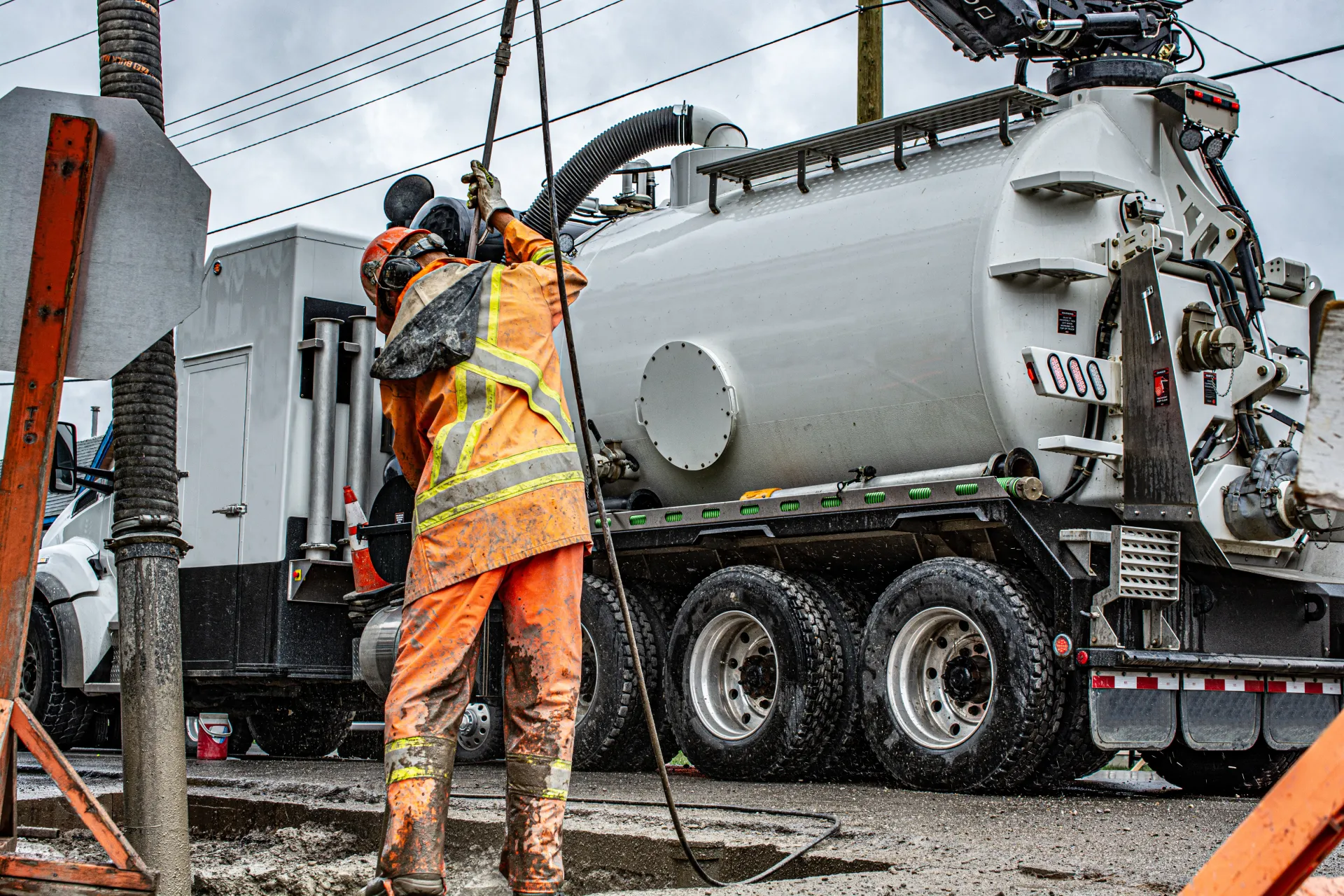
The process uses pressurised air or water to loosen material, which is then removed via a vacuum system. This enables controlled excavation around live services, even in highly constrained environments.
From an infrastructure perspective, vacuum excavation addresses three persistent problems:
- Unknown asset locations
As-built documentation is frequently incomplete or outdated, particularly in older urban areas. - Risk of service strikes
Mechanical excavation increases the likelihood of damaging live assets, with consequences that extend beyond the site boundary. - Programme disruption
Unplanned stoppages caused by asset damage quickly cascade into cost overruns.
As underground density increases, these issues are no longer occasional inconveniences. They are systemic risks, which is why vacuum excavation demand continues to rise.
Why Demand Is Increasing Across Infrastructure Projects
The growth in vacuum excavation demand is driven by a combination of safety, compliance and commercial reality rather than industry trends alone.
Key drivers include:
- Increased infrastructure investment across transport, utilities and energy
- Tighter WHS enforcement around service strikes
- Greater emphasis on early works accuracy
- Rising cost of unplanned outages and delays
On major projects, excavation errors are rarely isolated. A damaged fibre line can affect thousands of users. A gas strike can halt an entire precinct. These risks are no longer tolerated as part of doing business.
Vacuum excavation provides a measurable reduction in uncertainty, which is why it is increasingly specified rather than suggested.
Urban Density and the Role of Precision Excavation
In major metropolitan areas, underground congestion is the norm. Multiple generations of infrastructure often occupy the same corridor, layered over decades with varying standards of documentation.
In Sydney, this density has made precision excavation essential during early works, particularly when projects involve live electrical and data infrastructure. Contractors delivering complex builds increasingly rely on vacuum excavation services in Sydney to expose assets before any mechanical plant is introduced to site.
This approach reduces the likelihood of redesigns mid-construction and allows downstream trades to work with confidence rather than caution.
Regional Growth Is Driving Demand Too
While metropolitan projects dominate headlines, vacuum excavation demand is also growing rapidly in regional growth corridors.
Areas such as the Central Coast are experiencing sustained investment in utilities upgrades, transport links and commercial development. These projects often involve older infrastructure networks that were never designed to accommodate modern service loads.
On these sites, vacuum excavation supports accurate service location without widespread disruption, which is why it has become standard practice for contractors engaged in vacuum excavation on the Central Coast as part of integrated civil and electrical works.
The key difference in regional environments is not complexity but consequence. A single service outage can affect an entire community, making risk reduction non-negotiable.
Utilities Expansion and Population Growth
Queensland’s infrastructure pipeline provides another clear indicator of rising vacuum excavation demand. Population growth continues to place pressure on power, water and telecommunications networks, many of which require live upgrades rather than full shutdowns.
In Brisbane, vacuum excavation is commonly used to expose services in active corridors where outages are not an option. This is particularly relevant on projects involving network augmentation, where vacuum excavation services in Brisbane allow works to proceed without compromising public access or safety.
As utility projects become more complex, excavation accuracy directly influences stakeholder confidence and project approval pathways.
Safety Outcomes That Actually Matter
Service strikes remain one of the most common high-risk incidents on infrastructure sites. Despite improvements in detection technology, physical excavation remains the point where most failures occur.
Vacuum excavation improves safety outcomes in practical, observable ways:
- Services are exposed visually before works continue
- Manual digging around live assets is reduced
- Plant interactions are more controlled
- Near misses decrease significantly
These improvements are not theoretical. They are reflected in reduced incident reports, fewer stop-work events and improved WHS performance across projects.
For contractors delivering electrical, telecommunications and civil scopes concurrently, this level of control is essential rather than optional.
Efficiency, Not Just Caution
A common misconception is that vacuum excavation slows projects down. In isolation, it can be slower than mechanical digging. In reality, it often accelerates overall delivery.
Efficiency gains occur because:
- Services are identified earlier
- Rework is reduced
- Design assumptions are validated on site
- Trade sequencing improves
When vacuum excavation is integrated into early works planning, it removes downstream uncertainty. This is particularly effective on complex builds delivered under a single project management framework, as demonstrated across the diverse infrastructure and construction projects completed by BRP Industries.
Environmental and Compliance Pressures
Environmental expectations are also contributing to increased vacuum excavation demand.
Vacuum excavation disturbs less ground, produces less spoil and reduces surface damage. These characteristics are particularly valuable on projects operating under strict environmental approvals or within existing urban assets.
From a compliance perspective, vacuum excavation supports:
- Reduced environmental impact
- Easier site reinstatement
- Improved audit outcomes
- Stronger alignment with asset owner requirements
As regulators and asset owners continue to raise expectations, non-destructive excavation methods are increasingly seen as baseline practice.
Mechanical vs Vacuum Excavation Comparison
To understand why vacuum excavation demand continues to grow, it helps to compare it directly with mechanical excavation in infrastructure contexts.
| Factor | Mechanical Excavation | Vacuum Excavation |
| Speed | Fast for bulk removal | Slower but controlled |
| Accuracy | Limited near services | High precision |
| Risk of damage | High in congested areas | Significantly reduced |
| Rework potential | Common | Minimal |
| Suitability for live assets | Poor | Strong |
This comparison highlights why vacuum excavation is increasingly used for early works and service exposure, even when mechanical excavation is still required later in the programme.
Integrated Delivery Is the Real Advantage
The real value of vacuum excavation emerges when it is not treated as a standalone activity.
When excavation is delivered alongside electrical, data, security and civil works under a single contractor, interfaces are reduced, and accountability is clearer. This integrated approach allows service exposure, installation and reinstatement to be planned as one continuous workflow rather than disconnected tasks.
As vacuum excavation demand continues to rise, contractors that combine technical excavation capability with full project management will be better positioned to deliver consistent outcomes across complex infrastructure environments.
Looking Ahead to 2026
The trajectory of vacuum excavation demand points clearly upward. Infrastructure pipelines are growing, underground environments are becoming more complex, and tolerance for avoidable risk is shrinking.
Vacuum excavation is no longer a specialist solution reserved for high-risk sites. It is becoming a standard methodology for infrastructure projects that prioritise safety, certainty and efficiency.
For project teams planning work in congested or live environments, early engagement remains one of the most effective ways to manage excavation risk. Conversations around methodology, staging and service exposure often begin well before site mobilisation. If you are mapping out upcoming works and want clarity around the safest and most efficient approach, we are always open to an early discussion. You can get in touch with us through our contact page.