

Safety in Civil Utilities Construction isn’t just about hi-vis vests and hard hats anymore. As trenchless technology takes over as the preferred solution for underground infrastructure, the safety standards and tools surrounding it are rapidly evolving.
From digital planning tools to real-time environmental monitoring, these innovations aren’t optional; they’re essential. If you’re managing large-scale construction projects or working in the field, here’s what you need to know about the most effective trenchless technology safety improvements being used today.
What Does Trenchless Technology Safety Actually Involve?
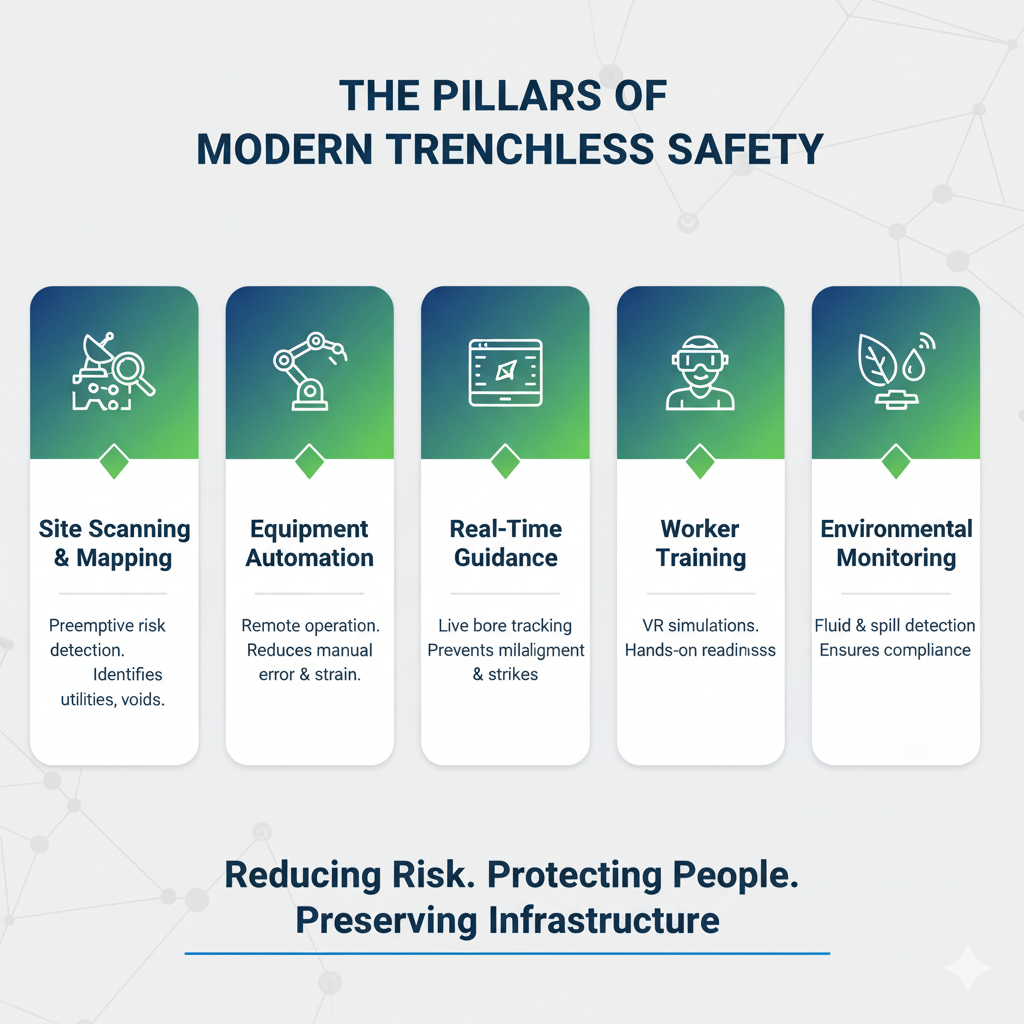
Trenchless technology safety includes all the systems, protocols and tools designed to minimise risk during underground construction, without digging large open trenches.
It covers:
- Site scanning and mapping
- Equipment automation and remote operation
- Real-time guidance systems
- Worker training through simulations
- Environmental monitoring
Trenchless Technology Safety Innovations Every Contractor Should Know
The goal is to reduce risk across the board, both for workers and infrastructure. Contractors who ignore these advancements aren’t just falling behind, they’re increasing the risk of incidents, cost blowouts and delays.
1. Real-Time Tracking Reduces Risk and Improves Accuracy
Manual guesswork is quickly being replaced by real-time tracking and guidance systems. These are essential on directional drilling sites where precision is key.
Here’s how these systems improve safety:
- Live navigation: Keeps the drill head on the intended path, preventing strikes to underground utilities.
- Soil condition detection: Sensors identify changes in soil density, moisture or composition.
- Depth and pitch tracking: Accurate bore depth prevents misalignment and potential breakouts.
At BRP Industries, the team integrates GPS-enabled directional drilling systems into every job, whether they’re working in the Central Coast or managing infrastructure under tight urban constraints like in Sydney.
Using these technologies helps reduce damage to utilities, prevents delays, and ensures the worksite remains safe and compliant.
2. Ground Scanning is Now Standard for Pre-Drill Risk Reduction
Before drilling begins, ground scanning plays a vital role in identifying potential underground hazards. This pre-emptive approach avoids unexpected collisions with gas, water, power and comms lines.
Current scanning methods include:
- Electromagnetic location: Locates metallic underground utilities quickly.
- Ground-penetrating radar (GPR): Creates subsurface images that highlight voids, pipes and cables.
- Utility mapping software: Combines scan data into easy-to-read digital models.
By integrating these tools into early-stage planning, BRP Industries can map underground risks with accuracy, critical for projects like the fibre rollouts in Brisbane or high-density areas such as the Gold Coast.
3. Remote Operation and Automation Keep Crews Out of Danger Zones
Modern trenchless rigs now come equipped with remote operation capabilities, meaning fewer people need to be in high-risk areas during active drilling.
Benefits include:
- Remote-controlled steering systems: Operated from a safe distance using real-time feedback.
- Automated rod handling: Reduces physical strain and eliminates manual contact with heavy machinery.
- Built-in emergency stops: Allow instant shutdown in case of unexpected movement or error.
This doesn’t just protect people, it also increases accuracy and operational efficiency. The BRP Industries team incorporates these automated features into every directional drilling job, allowing crews to work safely across regional and metro locations, from Newcastle to Canberra.
4. Digital Planning Tools Offer Safer Project Execution
Planning for trenchless installations has evolved from pen-and-paper sketches to fully digital simulations and modelling. These tools allow contractors to visualise and assess risks before breaking ground.
Key features of modern planning platforms:
- 3D subsurface models: Show utility positions and soil composition.
- Risk simulations: Identify weak spots in bore paths or potential utility clashes.
- Real-time collaboration: Allows engineers and field crews to work together, even remotely.
This level of preparation is a core part of BRP’s project management services, giving clients across NSW and QLD full confidence in the safety and feasibility of each project before machinery even rolls in.
5. Environmental Monitoring Ensures Compliance and Protection
Trenchless work doesn’t just need to be safe for people; it must also be safe for the environment. That’s where real-time environmental monitoring systems come into play.
Features include:
- Fluid pressure sensors: Help prevent frac-outs and fluid loss.
- Spill detection: Early alerts minimise environmental damage and fines.
- Eco-friendly fluids: Reduce the ecological footprint of drilling operations.
These innovations are especially important in protected areas or near waterways. BRP Industries factors environmental compliance into every stage of their trenchless projects, helping clients meet legal obligations while minimising long-term impacts.
6. Updated PPE and Safety Standards for Trenchless Teams
PPE isn’t just about ticking boxes. New safety standards and gear are being rolled out specifically for trenchless operations, where confined spaces, pressurised systems and remote machinery present unique risks.
Recommended PPE upgrades:
- Smart helmets: Include comms systems and hazard alerts.
- High-visibility moisture-wicking gear: Improves comfort and reduces overheating.
- Impact-resistant gloves and boots: Designed for underground rig work.
These aren’t optional add-ons; they’re essential for protecting workers as trenchless operations increase in speed and complexity.
Summary Chart: Safety Innovations and Their Benefits
Here’s a quick-reference overview of the key safety innovations and what they offer:
| Safety Innovation | Description | Benefit |
| Real-time tracking | GPS-enabled drill tracking and depth measurement | Fewer utility strikes, better accuracy |
| Ground scanning | GPR, electromagnetic locating, digital mapping | Early hazard detection |
| Remote rig operation | Automation and remote steering of trenchless rigs | Keeps workers out of danger zones |
| Digital project planning | 3D modelling and job simulations | Safer, data-driven decision making |
| Environmental monitoring | Pressure sensors and eco-friendly fluids | Prevents spills and protects habitat |
| Modern PPE | Smart helmets, breathable gear, reinforced gloves | Better protection in trenchless work |
Why Contractors Can’t Ignore Trenchless Safety
Choosing not to adopt these safety technologies doesn’t just create hazards; it can derail entire projects. Delays from underground damage, injury claims, or environmental breaches cost more than any upfront investment in smarter systems.
The team at BRP Industries works closely with clients to integrate these safety innovations into every directional drilling project, ensuring work is delivered efficiently, legally and without compromise.
Let’s Make Your Next Trenchless Project a Safer One
Modern construction demands more than just fast results; it demands safe, smart and sustainable solutions. If you’re looking for a contractor that prioritises innovation and worker protection on every trenchless job, BRP Industries is the team to trust.
From detailed planning to on-site execution, BRP delivers expert-led trenchless services that meet the latest safety standards. Contact us today to learn how we can keep your next project safe, efficient and fully compliant.