


Australia’s renewable energy sector is evolving rapidly. From large-scale solar farms to decentralised wind generation and smart city infrastructure, one common challenge remains: how to install underground services efficiently, cost-effectively, and with minimal disruption.
Directional drilling has become the go-to solution for connecting renewable energy projects to the grid. As 2026 approaches, this trenchless technology is helping developers, councils, and contractors complete complex infrastructure with speed and precision, without tearing up the landscape.
In this blog, we explore how directional drilling is supporting renewable energy rollouts and why companies like BRP Industries are leading the charge.
What is directional drilling, and why is it used in renewables?
Directional drilling (also referred to as horizontal directional drilling or HDD) is a method used to install underground utilities without traditional trenching. It allows pipes, conduits and cables to be laid along precise underground paths, even beneath rivers, roads and built-up areas.
This is ideal for renewable energy installations where the environment must be preserved and surface disruption minimised.
Whether it’s a solar farm in regional NSW or EV charging infrastructure in Brisbane, directional drilling is the preferred technique to get underground services from point A to B with minimal impact.
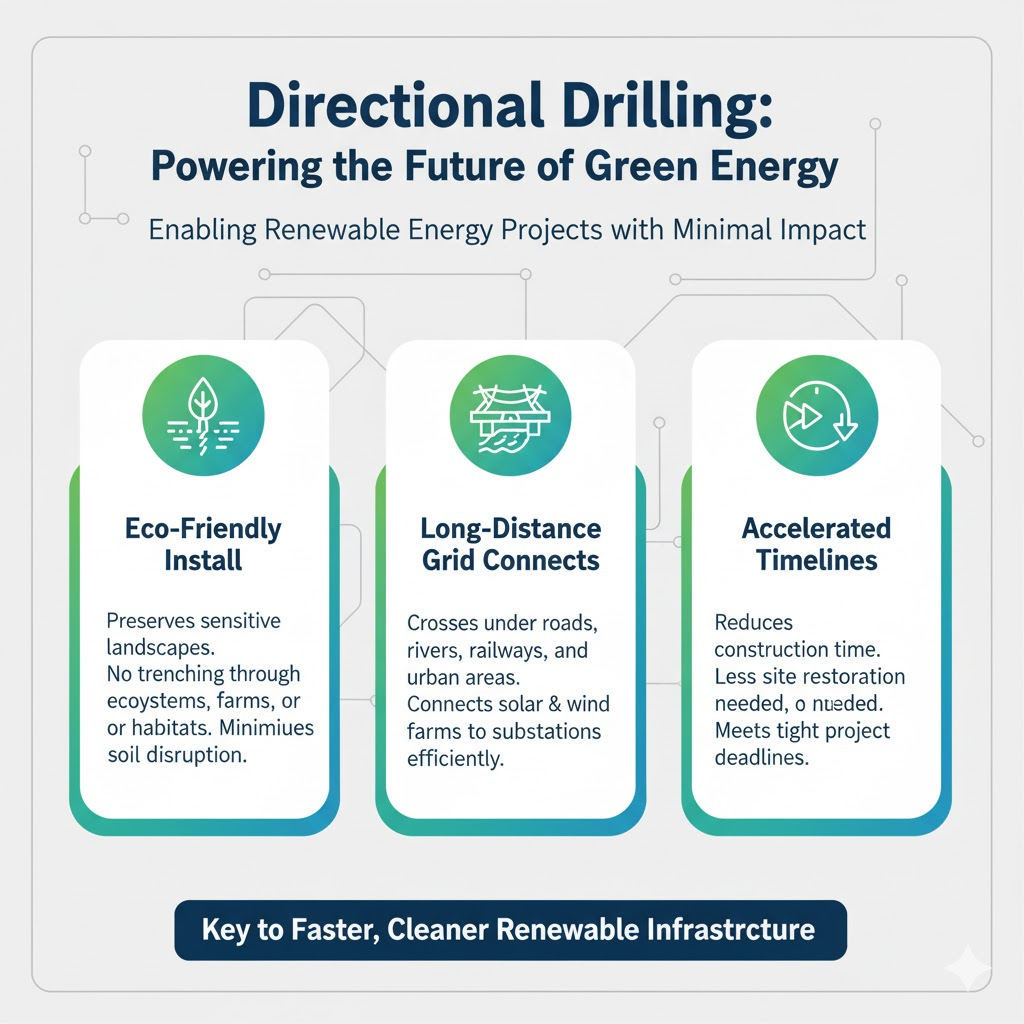
How directional drilling supports renewable energy projects
- Environmental preservation
Large-scale solar and wind projects are often located in areas with sensitive terrain, agriculture or native ecosystems. Using directional drilling allows essential infrastructure to be installed with minimal excavation or damage to the surface. - Grid connections across long distances
Renewable projects require electrical and data cabling to connect them to substations and national networks. Directional drilling allows these services to cross long distances, including under roadways, rail corridors or waterways. - Rapid project timelines
With trenchless methods, downtime and site restoration are significantly reduced. This is particularly valuable when working to tight construction deadlines or during weather-sensitive windows.
The team at BRP Industries has delivered directional drilling solutions for energy infrastructure projects across the East Coast, including recent work in Sydney and the Central Coast, supporting local councils and private developers.
The role of directional drilling in solar farm infrastructure
Installing underground services in and around solar farms requires a non-invasive approach. Trenches can damage existing vegetation, require lengthy remediation, and interrupt operations.
Directional drilling allows:
- Conduits to be installed under internal access roads without cutting through gravel or concrete
- Electrical lines to connect panels to switchboards and substations with no surface disturbance
- Telecommunications and fibre lines to enable remote monitoring of solar systems
In projects across regions like Newcastle, solar developers are increasingly specifying HDD as the default method for underground installation. It offers both environmental protection and cost savings in the long term.
Wind farms and directional drilling: a practical partnership
Wind energy projects face unique geographical challenges. Often located in elevated or coastal regions, these sites typically span vast areas and require high-voltage underground cabling.
Directional drilling plays a key role by:
- Allowing cable installation under slopes and rough terrain
- Crossing beneath public roads without needing council road opening permits
- Preserving native vegetation zones or animal corridors
In locations like Canberra, where wind farm development is ramping up, HDD techniques help simplify approvals and improve the environmental profile of the project.
Electric vehicle infrastructure and smart cities
As EV adoption increases, so does the need for charging infrastructure. Cities across Australia are upgrading streetscapes to include public and private chargers, most of which require an underground electrical supply.
Directional drilling is used to:
- Install conduits beneath footpaths, kerbs and carparks
- Connect charging stations to the main grid or microgrid
- Integrate EV chargers with smart energy management systems
In Gold Coast, the shift to smart city infrastructure includes trenchless installation of fibre networks and power cabling, all of which benefit from HDD’s clean, efficient approach.
What’s new in directional drilling technology for 2026?
The trenchless industry is embracing automation and improved geotechnical analysis tools to boost accuracy and safety. In 2026, we’re seeing directional drilling evolve with:
- Real-time tracking and GPS-guided rigs
Improves bore path accuracy and reduces the risk of utility strikes. - Advanced ground condition analysis
Helps contractors avoid problem soils and reduce project risk. - Electric drill rigs
Lower emissions and quieter operation, ideal for urban sites or environmentally sensitive areas.
With rising expectations for sustainability and efficiency, civil contractors are prioritising HDD on tenders that involve renewable or public infrastructure.
Where BRP Industries fits in
BRP Industries offers a full range of HDD services with in-house project management, giving clients complete confidence from planning to handover. We bring together expertise in electrical, communications and civil works, which makes us a strong delivery partner on complex infrastructure jobs.
Clients value our ability to provide tailored solutions across different environments. Whether it’s directional drilling beneath busy city streets in Brisbane or navigating rural conditions on remote solar sites, BRP brings practical insight and reliable outcomes.
Our team has also supported cross-regional work involving multiple councils and utilities, managing the logistics and compliance needed for seamless execution.
Key benefits of working with BRP on directional drilling projects
- End-to-end delivery
From design review to traffic control and reinstatement, everything is handled in-house. - Multi-sector experience
Projects spanning energy, telecommunications, data centres, government and civil infrastructure. - Geographically flexible
Operating across major regions including Sydney, Canberra, Gold Coast and more. - Highly trained personnel
Our tradespeople are qualified, ticketed and experienced across a wide range of field conditions. - Transparent project communication
Clients are updated through every stage, ensuring no surprises and minimal delays.
Where to next for renewable energy and trenchless delivery?
The renewable energy sector is forecast to expand significantly through 2026 and beyond. With federal and state incentives continuing to drive uptake, infrastructure requirements will become more complex and interconnected.
Directional drilling will remain a core strategy to manage this complexity, delivering power, data and control cabling with speed and efficiency.
Organisations looking to future-proof their energy and utility projects are already specifying HDD at the planning stage, especially where sensitive land or strict environmental conditions apply.
Let’s talk about your next directional drilling project
From solar and wind installations to EV charging rollouts, BRP Industries is ready to support your next infrastructure project with smart, trenchless delivery.
With a professional, multi-skilled team and extensive experience across sectors, we deliver directional drilling services that help renewable energy projects stay on track and under budget.If you’re planning a project and want expert input, contact us today to learn how we can assist with seamless underground delivery solutions across NSW and QLD.