

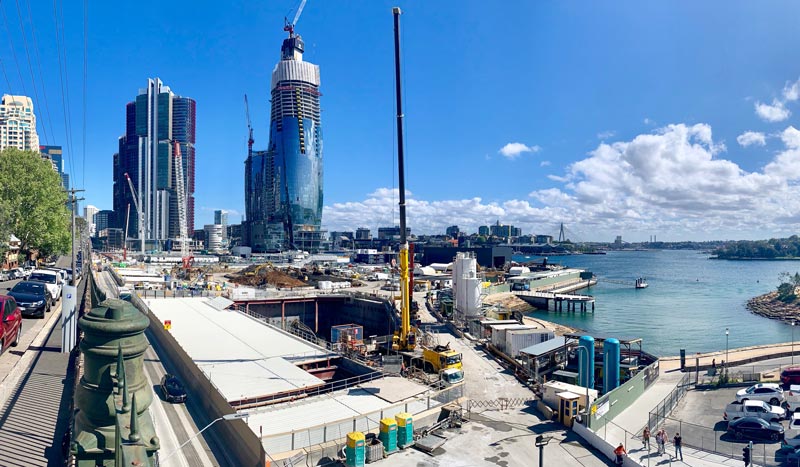
Net-zero targets have moved from policy documents into contracts, programmes, and performance reporting. That shift lands heavily on civil works, because levels, drainage, access, and service corridors shape everything that follows. Get the early decisions right, and carbon falls, rework drops, and resilience improves. Get them wrong, and you lock in waste for decades. This is the practical case for sustainable civil design.
What is sustainable civil design?
Sustainable civil design is the practice of planning and delivering civil infrastructure (earthworks, pavements, drainage, structures, and service routes) to minimise whole-life environmental impact while still meeting safety, budget, and performance requirements.
It is not a single material choice or a tick-box rating tool. It is a set of design behaviours.
It focuses on carbon, water, ecology, durability, and constructability at the same time, because those outcomes are linked. A well-coordinated design typically needs fewer truck movements, fewer variations on site, and fewer “dig it up again” moments later.
Where does carbon actually come from in civil works?
A useful way to keep conversations grounded is to separate embodied emissions from construction emissions and operational impacts. The exact numbers vary by site, but the pattern is consistent: materials and haulage dominate early, then maintenance and replacement dominate later.
Simple hotspot table (typical drivers on large projects)
| Civil element | Common carbon driver | Why it matters | Practical lever |
| Concrete (pits, footings, kerbs) | Cement content | Cement is carbon intensive | Right-sizing, mixes, avoid over-spec |
| Pavements | Layer thickness, aggregates | High volumes, repeated deliveries | Design life, subgrade prep, reuse |
| Earthworks | Plant hours, trucking | Fuel burn and haul distances | Balance cut/fill, stage works |
| Drainage | Pipe material, excavation | Deep trenches drive spoil and plant time | Optimise alignments and depths |
| Rework | Variations and clashes | Carbon gets paid twice | Coordination and clear interfaces |
The table is boring on purpose. Boring is good when you are trying to reduce emissions, because it keeps the focus on decisions you can actually control.
How does sustainable civil design reduce whole-life carbon?
Whole-life carbon improves when you do less heavy work, move fewer materials, and build assets that last longer with fewer interventions.
Start with geometry. Optimising finished surface levels to reduce cut and fill can remove thousands of cubic metres of plant effort. Next, look at haul. A “small” alignment tweak that shortens truck movements by even a kilometre each way adds up quickly on a major job.
Then design for durability. Longer-life pavements and better drainage details can reduce maintenance cycles, which often involve plant, traffic management, and replacement materials.
This is also where coordination stops being a project-management buzzword and becomes an emissions control measure. When programme sequencing and interface ownership are clear, you reduce clashes between trades. On multi-discipline builds, teams delivering end-to-end coordination through structured project management for complex construction delivery tend to spend less time fixing avoidable conflicts, and that is one of the quietest carbon savings you can make.
Which sustainable civil design decisions are easiest to implement on-site?
The best sustainability moves are the ones that survive contact with reality, meaning supply constraints, weather, access, and humans with excavators.
A few design choices are reliably build-friendly:
- Standardise details where you can: repeated pit, trench, and footing details reduce errors because crews see the same solution often, and the brief explanation is that repetition lowers variation risk.
- Design service corridors as a system: power, fibre, drainage and security pathways need workable separation, because a corridor that only works on CAD tends to become rework in the ground.
- Minimise “special” materials: if a product is hard to source, it increases substitutions and delay, and the brief explanation is that substitutions often increase emissions and cost.
- Create access that makes sense: if a plant cannot get in and out safely, productivity drops and fuel burn rises, because idle time still burns diesel.
These choices sit right in the wheelhouse of practical civil specialists. If you want an example of a civil-focused capability that fits within broader delivery scopes, the way civil design services are positioned for large-scale projects can be a useful reference point, particularly when civil works need to align with electrical, data, telecommunications, and security requirements.
How do you design for water sensitivity and climate resilience?
Net-zero infrastructure still has to handle heat, storms, and changing ground conditions. Sustainable civil design supports resilience by making water and soil behaviour central to the design, not an afterthought.
Water-sensitive approaches commonly include:
- Managing runoff close to where it lands: swales, raingardens, and permeable surfaces can slow and filter stormwater, and the brief explanation is that slower flows reduce downstream flooding risk.
- Designing detention for maintenance: basins that can be accessed and cleaned perform better over time, because neglected systems fail quietly.
- Reducing erosion and sediment transport: clear staging and protection measures avoid environmental harm and clean-up work, and the brief explanation is that prevention is cheaper than remediation.
Resilience also means materials and detailing. For example, good subgrade preparation and drainage can prevent premature pavement failures, which avoids replacement works later. In other words, resilient details are not “extra”, they are often the lowest-carbon option across the asset life.
Sustainable civil design and compliance: how do you keep it audit-proof?
Sustainability claims are increasingly scrutinised, especially on public and major private developments. The safest approach is to design so it is easy to verify.
That means:
- Clear specifications with traceability: where Environmental Product Declarations exist, use them appropriately, because they support transparent reporting.
- Inspection and test plans that capture sustainability-critical items: not just compaction and levels, but also material substitutions and installation quality, because untracked changes undermine performance.
- Interface documentation: confirming what sits where, who owns it, and how it is commissioned, because “someone else will handle it” is an expensive sentence.
Some projects also require accredited frameworks where work intersects with regulated networks or defined service-provider standards. In those cases, having access to an accredited service provider capability can reduce compliance friction while still allowing the design team to pursue practical sustainability outcomes.
What should you measure to prove sustainable civil design is working?
If you do not measure it, it will be value-engineered into oblivion.
You do not need a 200-page sustainability report to get started. You need a small set of indicators that match the design levers.
A simple measurement set many teams can manage:
- Earthworks balance (cut vs fill): Fewer imports and exports typically mean lower emissions, because hauling is a major driver.
- Haul distances for key materials: track the big-volume items, and the brief explanation is that transport can dominate when volumes are high.
- Concrete volume and mix strategy: focus on where concrete is used and whether designs are right-sized, because over-spec adds carbon permanently.
- Rework events and causes: measure how often you redo work and why, because the “why” points directly to coordination issues.
- Maintenance assumptions: record intended design life and maintenance intervals, because these choices drive long-term emissions.
Simple priority chart (impact vs effort)
Below is a quick, plain-language way to rank typical actions. “Impact” is potential carbon reduction. “Effort” is the design and coordination effort.
| Action | Impact | Effort | Why it ranks this way |
| Optimise levels to reduce cut/fill | High | Medium | Removes plant hours and trucking early |
| Prevent clashes via corridor coordination | High | Medium | Stops rework across multiple trades |
| Right-size concrete elements | Medium | Low | Often achievable through detail review |
| Specify maintainable drainage assets | Medium | Medium | Reduces long-term interventions |
| Switch minor finishes to “greener” options | Low | Low | Helpful, but rarely the main driver |
If you only do two things, start with cut/fill optimisation and corridor coordination. They are unglamorous and extremely effective.
How do you scope sustainable civil design so stakeholders approve it?
Stakeholders approve what feels controlled and deliverable.
The trick is to frame sustainability as a series of design trade-offs and risks, not a moral mission. That keeps the conversation objective, and it also makes approvals faster.
A clean scoping approach:
- Define success metrics early: choose a small set of measurable outcomes, and the brief explanation is that fewer metrics are easier to defend and track.
- Identify your top three carbon drivers: usually concrete, haulage, and rework, because they dominate on many civil packages.
- Lock interface ownership: decide who owns service corridor coordination and clash resolution, because shared ownership often becomes no ownership.
- Build sustainability into review gates: include it at 30/60/90 percent design, because late changes increase waste.
- Align delivery sequencing: civil, electrical, data, telecoms and security should be staged intentionally, because sequencing can eliminate repeat excavation.
If you need a sense of how multi-skilled delivery can support this kind of integrated thinking, the broader capability. BRP Industries provides a useful starting point for understanding how civil design can sit alongside project management and service delivery in one programme, rather than being treated as separate islands.
Conclusion: Sustainable civil design is where net-zero becomes buildable
Sustainable civil design works when it stays practical: fewer truck movements, clearer interfaces, durable details, and measurable decisions. It is less about flashy innovations and more about disciplined early-stage choices that reduce waste across the full asset life. If you are mapping out a large-scale project and want to pressure-test levels, corridors, staging, and compliance assumptions, the most efficient next step is to start a scoped conversation early in design, while changes are still cheap. You can do that by getting in touch with us and keeping the focus on measurable outcomes, not marketing promises.